
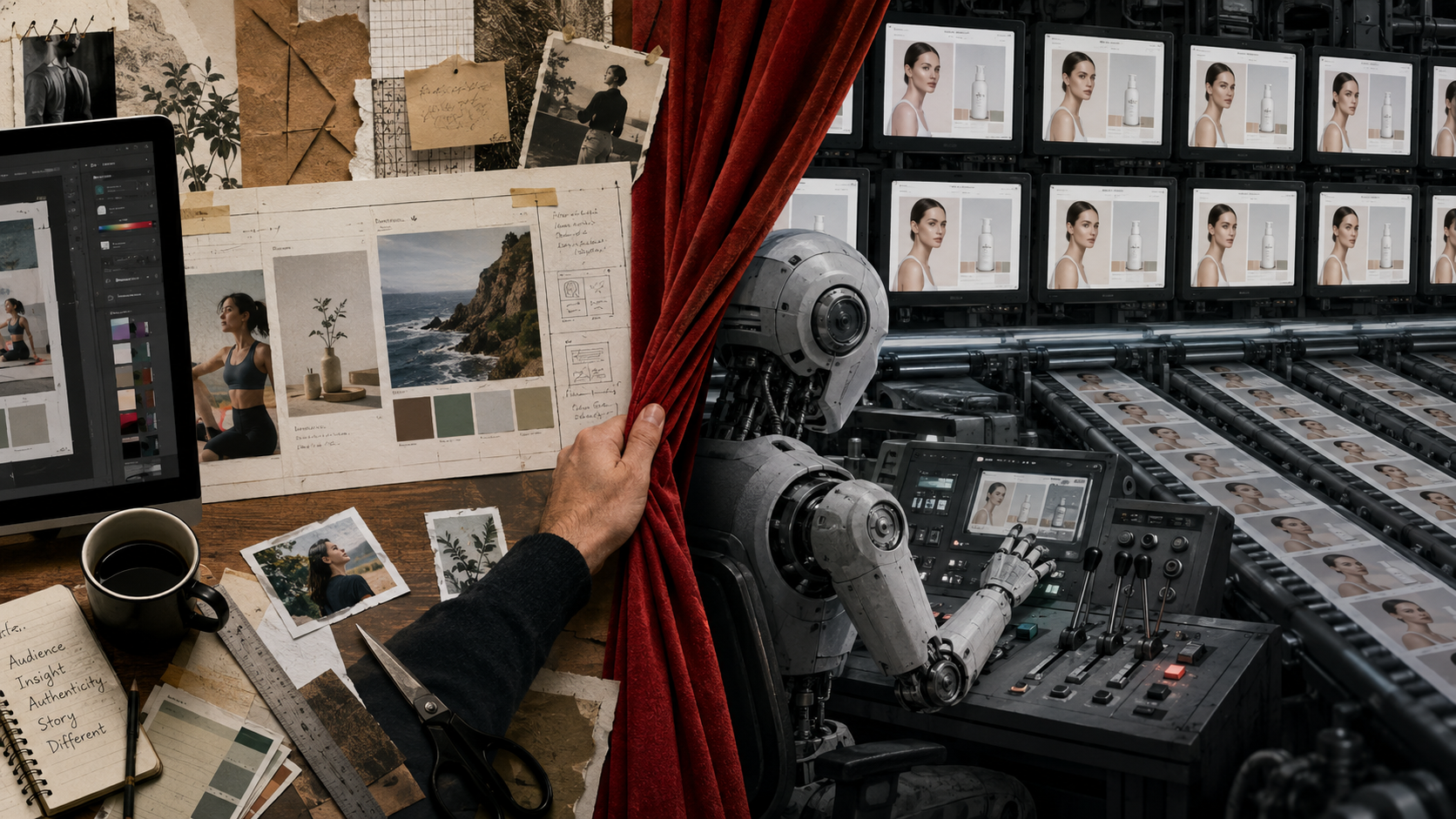
Here’s why I still design my clients’ ads the old-fashioned way.
AI is a fad, and though anyone can use it, that doesn’t mean anyone can create good advertising with it. The editing is often blindingly bad, the style, or lack of it, is obvious, and most people are doom-scrolling right past the same AI graphics and AI videos they’ve already seen a hundred times that day.
In a time when everything is “perfect,” polished and starting to look exactly the same, people are looking for something authentic. They want something real. They want marketing that says there’s a human behind the business and real people they’ll actually be working with, not a machine with a puppet master hiding behind it. Like the Wizard of Oz, “don’t pay any attention to the man behind the curtain.”
AI doesn’t make you a designer, and it doesn’t replace amazing designers like the ones we have. It doesn’t understand branding, buyer behavior, emotional response or the small details that make one client completely different from another.
When it’s used the right way, AI can generate individual pieces that are incorporated into ads and videos to create a more personal experience. It can help build a background, develop a visual element, test an idea or speed up part of the process. The problem starts when businesses let it do everything and assume that because the final product looks good, it must be good. It usually isnt and its soooooo obvious!
I’ve personally tested AI-generated ad materials against work created by our designers. I even left a few minor errors and imperfections in our designs to see what would perform better. Hands down, the work we created with our own abilities won.
The impressions were higher, the comments were refreshing and the cost per lead was significantly lower.
Why? Because people are looking for a glimpse of reality these days. They want something that resonates with them and gives them genuine, feel-good vibes. They want to see real people, real businesses and real situations, not another overly AI persona with strange hands standing in a spotless office that doesn’t exist.
Good design has never been about making everything perfect. It’s about understanding the client, knowing the audience and creating something that makes people stop because it feels relevant to them. Sometimes that means leaving a little imperfection. Sometimes it means using a photo that isn’t overly staged. Sometimes it means breaking a design rule because the finished piece feels more natural and believable.
AI can’t sit across from a client and understand what makes them different. It can’t hear the hesitation in their voice when a message doesn’t feel right. It can’t recognize when something technically looks good but is completely wrong for the business it’s supposed to represent.
Marketing is communication between people, and when you remove the human element, the audience can feel it. They might not be able to explain exactly what’s wrong, but they know when something feels fake, forced or mass-produced, and they keep scrolling.
The more AI-generated content floods every platform, the more valuable original human creativity becomes. When everyone’s using the same generators, prompts, templates, faces, lighting and video movements, everything starts to blend together.
AI can be useful, but it’s a tool. It isn’t the designer, the strategy or the entire creative process. At the end of the day, you need to be imperfectly you to build know, like and trust.